Why the Phrase “I Want Bang Tao” Isn't Enough for Choosing Property

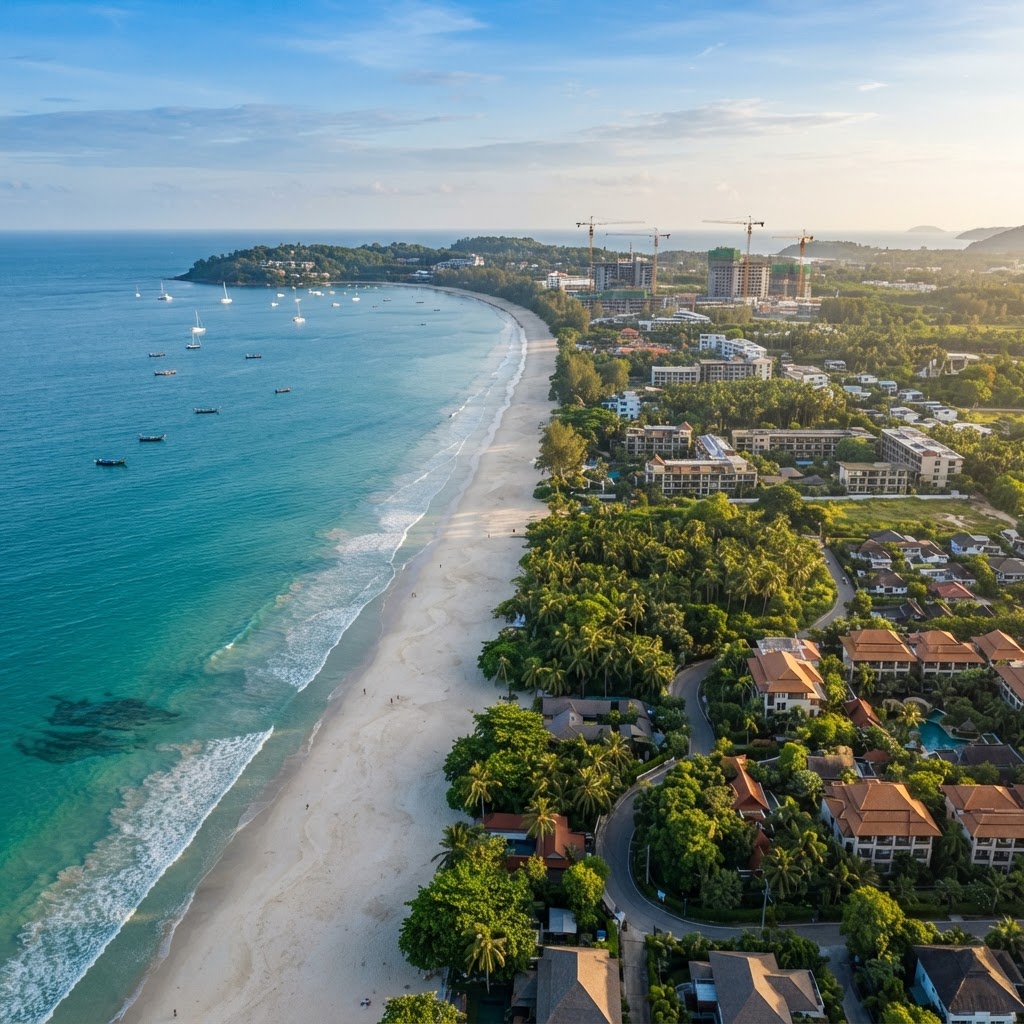
"I want a condo in Bang Tao."
We often hear this phrase from buyers who have already studied Phuket's areas, looked through dozens of presentations and roughly understand where they would like to live or invest.
But the phrase "I want Bang Tao" is only the beginning of the choice.
Within one large location there can be completely different properties:
- a condo from which you can actually walk to the beach;
- a complex 700 metres from the sea but across a busy road;
- a quiet residence that in a few years may end up in the middle of dense development;
- a project next to cafes and shops but far from the family's daily routes;
- an apartment with a beautiful view today, in front of which a new construction site may start tomorrow;
- an investment unit that will have to compete with hundreds of similar condos.
On the map all of these options may carry the same name: Bang Tao.
In real life they will deliver a different level of comfort, a different rental audience and different resale prospects.
So the buyer is not purchasing just an area. They are buying a specific point inside the area — together with its roads, neighbours, routes, future construction and competitive environment.
The buyer's main mistake: choosing an area's name instead of a life scenario
The name of a well-known location creates a feeling of safety.
If a property is in Bang Tao, Layan or Rawai, it seems half the work is already done: the area is popular, the sea is nearby, there is infrastructure around — so the condo must be convenient and in demand.
But the area alone does not answer the key questions:
- How long does the way to the beach actually take?
- Can you walk this route with a child or a stroller?
- Where do traffic jams form in the morning and evening?
- What is located on the neighbouring land plots?
- Which projects are being built nearby?
- How convenient is it to get to the school, gym and supermarket?
- How many similar condos will be offered for rent at the same time?
- Why should a future buyer choose this exact unit at resale?
Two complexes can be a few hundred metres apart, yet one will be organically built into the daily life of the area while the other will depend entirely on a car.
One will suit a family for permanent living, another a tourist on a short holiday, and a third only a specific rental scenario.
So the question should not sound like:
Which property should I buy in Bang Tao?
It should sound like:
Which point inside Bang Tao fits my goal, lifestyle and ownership horizon?
Bang Tao is not one homogeneous location
In listings and presentations the name Bang Tao is often used quite broadly. It may refer to property right next to the beach, projects in Cherng Talay, complexes near Laguna, more northern directions towards Layan and projects located deeper inland.
For marketing this is convenient: a well-known name immediately attracts attention.
For the buyer, this generalisation can hide important differences.
Within this territory the following change:
- distance to the beach and the quality of the route;
- traffic density;
- access to shops and restaurants;
- the character of surrounding development;
- noise levels;
- demand among different types of tenants;
- the volume of new supply;
- the cost of ownership;
- the liquidity of a specific property format.
The mere presence of the words Bang Tao in a presentation does not mean the property is within walking distance of the sea, suitable for permanent living or automatically highly attractive as an investment.
Let's look at five factors that help you see the real location behind the beautiful name of an area.
1. Real access matters more than distance on the map
"700 metres to the beach" does not always mean a seven-minute walk
The distance in a presentation can look convincing:
700 metres to the sea.
But this figure says nothing about the quality of the route.
In reality, along the way there may be:
- a stretch with no proper pavement;
- a busy road that is inconvenient to cross;
- a construction site or temporary fencing;
- a narrow lane with constant car traffic;
- territory you cannot walk through;
- a stretch that becomes difficult after heavy rain;
- an unclear or distant beach entrance.
As a result, a condo "near the sea" becomes a property from which most residents travel by car or motorbike.
For a tourist staying a few days this may be acceptable. For a family with a child, an older person or an owner planning to live in the condo for several months in a row, an inconvenient daily route quickly becomes a source of irritation.
How to check access properly
It is not enough to measure a straight line from the complex to the shoreline. You need to walk or drive the actual route and check:
- Where the official or actually used beach entrance is located.
- Whether there is a continuous and safe pedestrian path.
- Whether you need to cross a busy road.
- Whether the route is lit in the evening.
- Whether you can walk with a stroller, a child or an older relative.
- What happens to the road during rain.
- Whether the short way depends on passage through private territory.
- How long the route takes at a normal pace, not according to the marketing estimate.
For a rental condo this matters too. A guest compares not a figure in a brochure but their own experience: how easily they got to the beach, a cafe and a shop.
2. A few hundred metres can change your daily travel time
In Phuket, distance and time are not the same thing
A complex can sit right next to all the necessary infrastructure yet have an inconvenient exit.
Sometimes a difference of a few hundred metres determines whether you can quickly reach the main road or regularly sit in a queue.
It is especially important to check:
- narrow access streets;
- junctions without a convenient turn;
- exits next to schools;
- roads to major shopping and restaurant zones;
- routes simultaneously used by residents of several new projects;
- an alternative exit in case of repairs, an accident or heavy traffic.
For a tourist, an extra 15–20 minutes may seem a small issue. For a person who drives a child to school every day, goes to the gym or works outside home, this is part of quality of life.
You should not check just once
It is best to assess the location at different moments:
- on a weekday morning;
- during school runs;
- in the evening;
- at weekends;
- in high season;
- after heavy rain.
A single daytime viewing almost never shows the full picture.
A complex may seem quiet and conveniently located at 2 p.m. but look completely different at 8 a.m. or 6 p.m.
The question that is more useful than distance
Instead of asking "how many kilometres to the school?" it is better to ask:
How long does the way to school take in the morning, and what alternative routes exist?
The same applies to trips to the beach, supermarket, gym, clinic and workplace.
3. Today's view does not guarantee tomorrow's
One of the most emotional reasons for buying is the view from the window.
A buyer arrives at the site and sees:
- a green slope;
- an open field;
- palms;
- open sky;
- the sea between neighbouring buildings.
In a presentation this turns into a strong argument: "view of greenery", "panoramic view", "private atmosphere".
But the free plot next door will not necessarily remain free.
In a few years it may host:
- another condominium;
- a villa estate;
- a commercial building;
- a road;
- a car park;
- an infrastructure facility.
So the main question is not:
What is around the complex right now?
It is:
What is allowed or potentially possible to build on the neighbouring plots?
What to check before buying
Checking the future surroundings may include:
- the boundaries of the project's land plot;
- neighbouring land plots;
- land documents;
- current zoning and restrictions;
- announced master plans;
- known permits and construction works;
- the possible height and character of neighbouring development;
- ownership of access roads;
- the legal status of passages and driveways.
The official services of Thailand's Department of Lands provide tools for searching information about land plots and condominium objects, but an online map does not replace legal due diligence of documents in a specific transaction. Department of Lands Thailand
"View of greenery" is a description of the current state
Unless the preservation of the view is secured by documents or objective restrictions of the plot, it cannot be treated as a guaranteed characteristic of the condo for the entire ownership period.
This is especially important when the view:
- noticeably affects the price;
- is used in the calculation of future rent;
- is considered an advantage at resale;
- is the main reason for choosing a specific floor or building.
Paying a premium for a view makes sense only after the buyer understands how well protected that view is.
4. Infrastructure on the map and real life are different things
On a map around a project there may be dozens of restaurants, shops, salons and fitness studios.
This creates the feeling that everything you need is nearby.
But the number of points on the map does not show how well they suit a particular person.
One family needs an international school, a large supermarket and children's activities. Another buyer wants a beach, a coworking space and cafes. A third wants silence, a gym and a quick exit towards the airport.
So we look not only at the number of venues around, but at the person's real route.
For permanent living
Check:
- the way to school or kindergarten;
- a supermarket for regular shopping;
- a clinic and a pharmacy;
- a gym or sports sections;
- cafes you will actually use;
- parking;
- the time it takes to leave the area;
- noise levels in the morning and evening.
For a winter stay or a second home
What matters:
- convenient access to the beach;
- the ability to live without constant trips across the whole island;
- the presence of grocery shops and everyday services;
- restaurants and places to relax;
- transport;
- the quality of routes in rainy weather;
- the ability to close the condo and hand it over to a management company.
For renting out
You need to understand not only the infrastructure but also the portrait of the tenant:
- a tourist for one or two weeks;
- a family for several months;
- a remote employee;
- a couple without children;
- a long-term resident;
- a premium-segment tenant.
These groups have different requirements for space, kitchen, workplace, parking, beach and infrastructure.
A property can be in a popular area yet not match the expectations of the audience its economics are built for.
5. Competition is also part of the location
When analysing an area, buyers often look at demand and barely assess supply.
Yet the popularity of Bang Tao attracts not only tenants and buyers but also new developers.
According to Knight Frank Thailand, in 2024 Bang Tao accounted for 59.6% of new condominium supply in Phuket. In the same report, analysts warned that growing supply can increase competition in the rental market and complicate the resale of individual units. This is data for a specific period, not a forecast for any particular condo, but it clearly shows why a well-known area name is not enough. Knight Frank Thailand Research
Who the owner will compete with
If five more projects are being built near the complex you have chosen, you need to assess:
- how many units will come to the market;
- when they will be completed;
- what layouts they offer;
- how similar the sizes and prices are;
- whether your unit has a noticeable advantage;
- who will manage the rentals;
- what advertising budgets the new projects use;
- how many offers will appear on the secondary market.
A condo competes not with all the property in Phuket. It competes primarily with units that a tenant or future buyer perceives as interchangeable.
For example, a small one-bedroom condo will compete with other one-bedroom units of similar size, condition and price range — especially if they are in the same radius and offer similar infrastructure.
Why a new project can become a strong competitor
A new development next door may have:
- a fresher design;
- new communal areas;
- launch promotions;
- modern furniture;
- an active advertising campaign;
- instalments from the developer;
- a wider choice of floors and layouts.
So for resale it is not enough to count on "Bang Tao always being in demand".
You need to understand in advance how the specific unit will differ from the future supply.
One location — four different purchase scenarios
Buying for permanent living
Here the main indicator is not potential yield but everyday comfort.
Check:
- the family's morning and evening routes;
- the actual time to school;
- parking convenience;
- noise;
- the density of future development;
- the ability to walk;
- the quality of the kitchen and storage;
- access to medical and everyday services.
A beautiful resort complex can be a great place for a holiday but an inconvenient everyday home.
Buying for a winter stay or holidays
The beach, cafes, rest and simplicity of ownership come first.
It is also worth checking:
- actual walkability;
- the seasonality of the surroundings;
- construction noise nearby;
- house rules;
- maintenance costs;
- the performance of the management company;
- the ability to use the condo on the dates you need.
Buying to rent out
Here it is important to match the promised concept with real demand.
You need to determine:
- who the tenant will be;
- why they will choose this complex;
- which properties they will compare it with;
- which expenses reduce the gross income;
- how seasonal the occupancy will be;
- whether the chosen rental format is allowed;
- who is responsible for management, maintenance and finding guests.
A popular area can support demand but does not guarantee the occupancy, rate or net yield of a specific condo.
Buying with resale in mind
For a future exit from the property, what matters is:
- the entry price;
- the volume of similar supply;
- the stage of development of the surrounding area;
- the quality and reputation of the complex after completion;
- the condition of the unit;
- view characteristics;
- documents and the form of ownership;
- costs and restrictions on sale;
- the reason why the next buyer will choose this exact unit.
Liquidity is created not by the name of the area itself but by the combination of the right price, the property's characteristics, documents and a limited number of comparable alternatives.
Three checks that change how you see a property
1. Come in the morning
A morning visit shows real exits, school traffic, noise and everyday life around the project.
2. Return in the evening
In the evening, lighting, road congestion, music, restaurant activity and the sense of safety on the pedestrian route all change.
3. Look at the location after heavy rain
This shows how convenient it is to walk or drive to the complex, where water collects and which parts of the route become problematic.
Sometimes these three visits give the buyer more useful information than dozens of pages of a presentation.
Red flags in a location description
It is worth asking additional questions if you see wordings like:
- "a few minutes to the beach" without specifying the means of transport;
- "view of greenery" without an analysis of the neighbouring plot;
- "all infrastructure nearby" without a real route;
- "quiet area" amid active construction around;
- "perfect for rent" without a description of the tenant and competitors;
- "promising location" without specific factors;
- "liquid asset" without comparable offers;
- "centre of Bang Tao" without a precise definition of the point and daily routes.
Such phrases do not necessarily mean the property is bad. They mean that a presentation alone is not enough for a decision.
Buyer's checklist: what to check around the complex
Before booking, answer at least 15 questions:
- Where exactly is the plot located?
- What is the actual route to the beach?
- Is there a pavement and a safe crossing?
- What does the road look like after rain?
- How long does the morning exit take?
- Is there an alternative route?
- Where are the school, shop, gym and clinic?
- Can basic everyday tasks be done without a car?
- What is located on the neighbouring plots?
- What can potentially be built in front of your windows?
- Which construction sites are already underway nearby?
- How many similar units will appear after their completion?
- Who is the target rental audience of the property?
- How will the condo differ from competitors?
- Why will the next buyer choose it at resale?
It is useful to split the answers into three categories:
- confirmed by documents;
- checked on site;
- an assumption or a forecast.
This way the buyer sees where facts end and expectations begin.
How to compare properties within one area
Instead of a general list of "the advantages of Bang Tao", it is more useful to build a table of specific properties.
| Criterion | Property A | Property B | Property C |
|---|---|---|---|
| Actual route to the beach | |||
| Walkability | |||
| Morning exit | |||
| Evening noise | |||
| Neighbouring plots | |||
| Future construction | |||
| Everyday infrastructure | |||
| Number of competitors | |||
| Target audience | |||
| Resale advantage |
Such a comparison quickly shows that a more expensive property is not always better located, and a shorter distance on the map does not always mean a more convenient life.
Why a local team matters especially
A beautiful presentation can be opened from any country.
Layouts, visualisations and price lists are easy to send in a messenger. But they do not show what happens around the plot at different times of day.
Local analysis is needed in order to:
- walk the actual route;
- check the access roads;
- look at the neighbouring plots;
- see construction sites that are not yet on old maps;
- assess noise;
- compare the property with direct competitors;
- separate confirmed facts from marketing promises.
This does not replace legal due diligence and does not allow anyone to guarantee the future value of a property. But it helps you avoid buying an area by its name while ignoring the actual point.
The main takeaway
We rarely buy just Bang Tao, Rawai or Layan.
We buy:
- a specific turn;
- a specific driveway;
- a specific route to the beach;
- a specific view from the window;
- specific surroundings;
- specific competition;
- a specific resale scenario.
It is this micro-location that determines how convenient living in the condo will be, who it can be rented to and how it will differ from other offers.
So a good choice starts not with the question:
Which area of Phuket is the best?
But with the question:
Which point fits my specific goal best?
FAQ
Is it worth buying a condo in Bang Tao?
Bang Tao can suit living, holidays or renting out, but the decision depends on the specific complex, price, documents, surrounding development and your goal. The name of the area alone does not guarantee convenience or a financial result.
What matters more: distance to the beach or infrastructure?
It depends on the scenario. For a short holiday the beach may be the main priority. For permanent living, the daily route to school, shops, gym and work may matter more. Assess not only the distance but also the quality of the route.
How do I check that the view from my condo won't be blocked?
You need to study the neighbouring land plots, zoning, known projects and construction restrictions. If the view is an important part of the price, an independent legal and technical check is recommended.
Is Bang Tao suitable for permanent living?
The area has popular residential zones and developed infrastructure, but comfort depends heavily on the micro-location. Before buying, check traffic, noise, pedestrian routes, parking and the way to the infrastructure your family needs.
Does a popular area guarantee high rental income?
No. Income depends on the purchase price, unit format, season, expenses, rental rules, management quality and the number of competitors. The popularity of the area is only one of the factors.
What should I check before paying a deposit?
Besides the project documents and deal terms, check the real access, neighbouring plots, future construction, daily routes, direct competitors and whether the property matches your goal.
How to apply this to your choice
If you are considering property in Bang Tao, send us your budget, purchase goal, family composition and the daily routes that matter to you.
The Jungle House team will help you compare not just projects in one area, but specific points: beach access, roads, infrastructure, neighbouring development and the competitive environment.
📍 Send your selection request — message Evgeny Lebedev on WhatsApp
This material is for informational purposes only and is not legal, financial or investment advice. Future construction, traffic conditions, rental demand, prices and project terms may change. Documents, land rights, permits, contracts and financial calculations must be checked separately for each property.
Get new articles in Telegram - follow the Jungle House Phuket channel
TelegramWant to discuss investments?
Write to us and we'll find properties to match your budget with an honest return calculation.