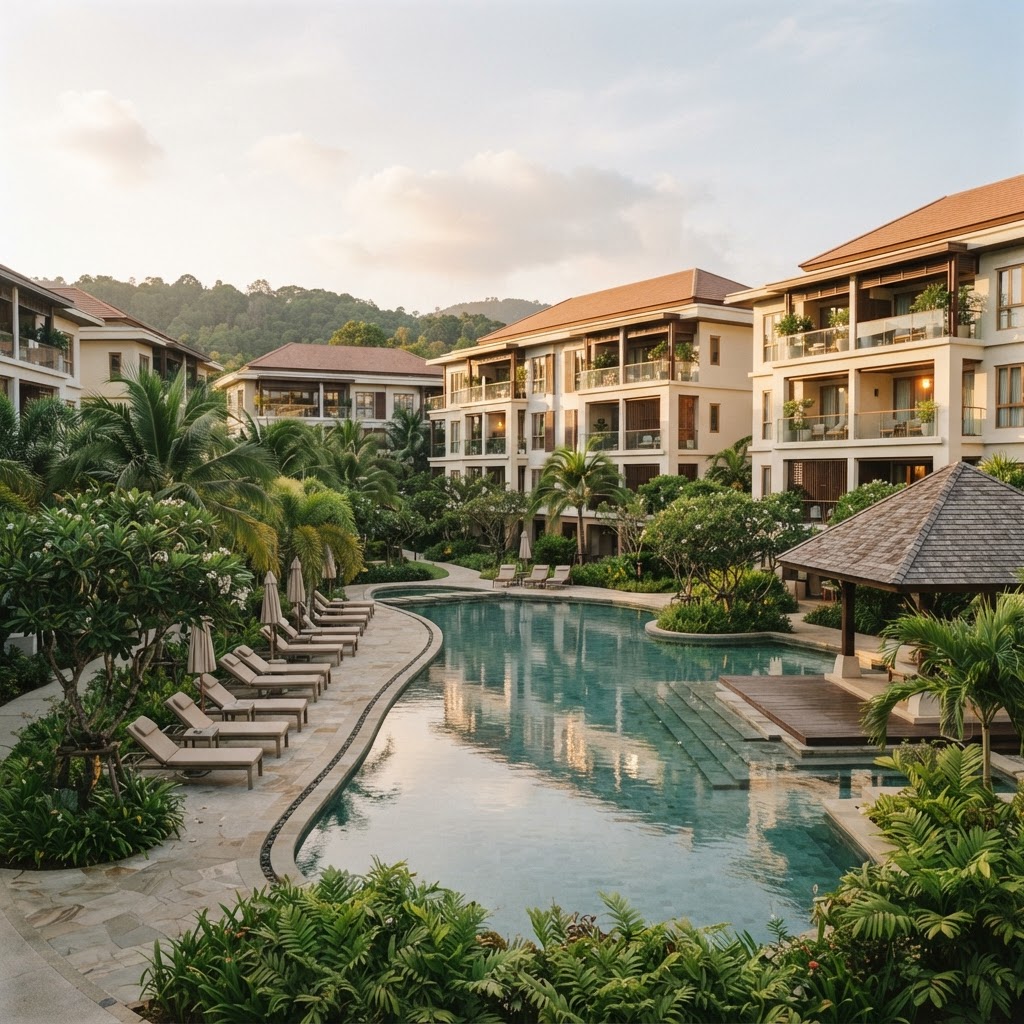
Freehold or Leasehold in Thailand: The Main Question Is Not “Which Is Better?”


One of the most common questions from property buyers in Thailand sounds like this:
What is better: Freehold or Leasehold?
In practice, however, this question is far too general.
Comparing Freehold and Leasehold without reference to a specific property is much like choosing between buying and renting without knowing what exactly is being offered, for how long, by whom and on what terms.
First you need to understand:
- what exactly the client is buying;
- who owns the land;
- who owns the building;
- what right will be registered;
- for what term it is granted;
- whether this right can be sold, transferred or left to heirs;
- what obligations will remain with the landowner or the developer.
Only after that can you assess whether the specific legal structure fits the buyer's goals.
In short: how Freehold and Leasehold differ
Freehold usually means a registered ownership right without a predetermined end date.
Leasehold is the right to use a property for a fixed term under the conditions of a lease agreement.
This does not mean that every Freehold is automatically safe and every Leasehold is necessarily bad. A freehold property may have problems with documents, permits, encumbrances or management. At the same time, a properly executed and registered lease may well match the buyer's goals.
The key difference lies not in the marketing name but in the content of the right.
| Question | Freehold | Leasehold |
|---|---|---|
| What the buyer receives | Ownership right | Lease right |
| Is there an end date | Usually no | Yes |
| Is registration required | Transfer of ownership is registered | A lease of immovable property for more than three years must be registered to protect the full agreed term |
| Can the right be sold or transferred | Usually through a registered transfer of ownership | Depends on the law, the contract and the owner's consent |
| What is inherited | The asset forms part of the estate, subject to applicable rules | Heritability of the right and contract terms must be checked separately |
| What the durability of the structure especially depends on | Title, encumbrances and legality of the property | The owner's title, registration, contract wording and the landlord's performance of obligations |
📋 Send us a property for review — message Viktor Garmashov on WhatsApp
If the buyer is choosing a condominium unit
For a foreigner, the most understandable form of Freehold is usually the purchase of a unit in a building officially registered as a condominium.
Provided the statutory conditions are met, a foreign buyer can register ownership of a specific unit.
What the foreign quota is
Foreigners may own units within the established foreign quota. Importantly, the limit is calculated not simply by the number of units but by the total area of all units in the building: the foreign-owned share must not exceed 49% of the total unit area. This is confirmed by an official government resource referring to the Condominium Act. Government Public Relations Department of Thailand
Therefore, it is not enough to see the “Foreign Freehold” mark in a price list. Before the transaction you must confirm:
- that the building is registered as a condominium;
- that the unit being sold has or will receive a separate title;
- that foreign quota is available at the time of registration of the transfer;
- that the condominium juristic person can issue the corresponding confirmation;
- that the buyer meets the requirements for the origin and transfer of funds;
- that the unit carries no encumbrances unknown to the buyer.
Foreign quota is not a marketing bonus — it is one of the conditions for registering a foreign buyer's ownership.
What exactly belongs to the unit owner
With Freehold, the buyer receives ownership of a specific unit and the corresponding share in the condominium's common property.
But even a registered ownership right does not remove the need to check:
- the condominium rules and regulations;
- the Common Area Management Fee;
- the Sinking Fund contribution;
- restrictions on renting out;
- service-charge arrears;
- the condition of the common areas;
- the management agreement;
- litigation and material obligations of the condominium juristic person.
Freehold answers the question about the form of ownership but does not automatically answer questions about the quality of the project, running costs and liquidity.
What Leasehold means
With Leasehold the buyer does not receive the land or the unit in perpetual ownership. They receive a lease right for a fixed term and on the conditions provided by the contract.
For leases of immovable property for more than three years, registration is particularly important. Without it, the agreed long term does not receive full protection: the Department of Lands' official material directly states that a lease for more than three years must be made in writing and registered; otherwise the right can be judicially enforced only within the first three years. Department of Lands
The maximum initial term
For an ordinary lease of immovable property, Thailand's Civil and Commercial Code sets a term of no more than 30 years. After the lease ends, the parties may conclude an extension, but the new period must also not exceed 30 years. Civil and Commercial Code, Sections 538–545
An important practical conclusion follows:
The formula “30+30+30” is not the same as an already registered lease right for 90 years.
The first 30-year period and promises of future extensions are legally not the same thing.
You need to find out:
- what is registered now;
- who is obliged to sign the extension;
- whether this obligation survives a change of owner;
- what happens if the company is liquidated or goes bankrupt;
- whether the cost of the extension is defined;
- what actions will be required in 30 years;
- whether the promise of an extension is an independent obligation or merely a marketing formula.
The mere presence of the words “30+30+30” in a contract does not mean the buyer already holds a secured right to all 90 years.
🔍 Have a specific Leasehold checked — message Viktor Garmashov on WhatsApp
Why a “Leasehold condo” requires separate scrutiny
In the same condominium, foreigners may be offered different ownership arrangements:
- Freehold within the foreign quota;
- Leasehold;
- another use agreement or participation in an investment programme.
Physically the units may look identical, but legally the buyers receive different rights.
With Leasehold you must check:
-
Who owns the unit.
-
Whether that owner has the right to lease it out.
-
For what term the agreement is concluded.
-
Whether the lease will be registered.
-
Whether the right can be transferred to a new buyer.
-
Whether the landlord's consent is required and how much it costs.
-
Whether the unit may be sublet.
-
What happens to the contract if the owner sells the unit.
-
How the inheritance terms are drafted.
-
What payments arise on assignment, extension or early termination.
As a general rule, assignment of the lease and subleasing must be permitted by the contract. If there is no such permission, the ability to freely dispose of a Leasehold may turn out to be limited. This directly affects the property's liquidity.
Villas require especially careful checking
The phrase “Leasehold villa” can denote several different legal structures.
Therefore the offer must be split into at least two separate objects of verification:
1. How the land is held
A foreign buyer, as a rule, cannot simply register ownership of a land plot in Thailand in their own name. There are narrow exceptions, but they cannot be considered the standard scheme for buying a resort villa. A Thai government resource also points to the general restriction on foreign land ownership. Government Public Relations Department of Thailand
In practice, the land under a villa may:
- remain in the developer's ownership;
- belong to a Thai individual;
- belong to a Thai company;
- be transferred to the buyer as a registered lease;
- be under a mortgage or other encumbrances.
You need to check not only the owner's name but also the basis of their right, registered restrictions and the authority to sign the contract.
2. How the building is held
The land and the villa built on it are not always one and the same object of rights.
A foreigner may own the building separately from the leased land, but such a right must be confirmed not by a marketing presentation but by proper documents and registration actions. The possibility of separate ownership of a building on leased land is also described by the Board of Investment's investment arm. Thailand Board of Investment — OSOS
Therefore, before buying a villa you must establish:
- who owns the land;
- who currently owns the building;
- in whose name the construction permit was issued;
- on what basis the building will be transferred to the buyer;
- whether the right to the building will be registered separately;
- whether the term of use of the building matches the term of the land lease;
- what happens to the building after the lease ends;
- whether the buyer can sell the land and villa as a single investment position;
- who must approve such a transaction.
If the seller shows only a land lease agreement, this does not yet prove that the buyer will receive a separate ownership right to the villa.
🏡 Request a villa check — land and building — message Viktor Garmashov on WhatsApp
Which documents you need to see before the deal
Verification starts not with a brochure, a render or a yield table. It starts with documents.
Land documents
Request:
- the document confirming the right to the land plot;
- current information about the registered owner;
- the plot plan and boundaries;
- information on mortgages, leases, servitudes and other encumbrances;
- documents confirming legal access to the road;
- documents of the landowner, if it is a company;
- confirmation of the signatory's authority.
It is especially important to check that the plot in the documents matches the actual location of the project.
Building documents
Depending on the stage and type of the property, the following are checked:
- the construction permit;
- approved plans;
- documents on completion or commissioning of the building, if applicable;
- documents on the current owner of the building;
- the basis for the future transfer of the building to the buyer;
- the landowner's consent to construction and the transfer of rights;
- conformity of the actually built property to the approved project.
Leasehold documents
You need to see:
- the full lease agreement;
- the subject of the lease with an exact description of the property;
- the term and its start date;
- the registration record;
- the amount and procedure of payment;
- extension conditions;
- the right to transfer the lease;
- the right to sublease;
- the sale procedure;
- inheritance conditions;
- grounds for early termination;
- consequences of breach of contract;
- the parties' obligations after the term ends.
It is also useful to check which version of the contract prevails in case of discrepancies between the Russian, English and Thai texts.
What to check when selling the property
A Freehold owner usually sells the property through a registered transfer of ownership.
With Leasehold, what is sold is not the land itself but the remaining lease right, or a new contract is concluded. The possibility of such a transaction depends on the contract text and the owner's participation.
Before buying you should find out:
- whether assignment of the right is allowed;
- whether the landlord's prior consent is required;
- whether the landlord can refuse;
- whether an administrative or transfer fee is set;
- whether the new buyer receives the remaining term or a new term;
- who pays for registration and taxes;
- whether promises of future extension survive;
- whether management and lease agreements extend to the new buyer.
Every year that passes shortens the remaining term of a Leasehold. This can affect the price and the pool of potential buyers. Therefore, comparing two properties only by entry price is wrong: the remaining term and the exit conditions must be taken into account.
What to check regarding inheritance
The phrase “a Leasehold can be passed to heirs” is too general without studying the contract.
You need to establish:
- whether the right terminates on the lessee's death;
- whether heirs or successors are named;
- whether the landowner is obliged to recognise the heir;
- whether a new contract is required;
- whether re-registration is needed;
- whether fees arise;
- whether the rights to the building pass together with the lease;
- what happens if the heir does not meet the contract conditions.
With Freehold, the unit also goes through probate, but a foreign heir must consider the requirements of the Condominium Act and the actual state of the foreign quota. Inheritance of any Thai asset is best planned in advance together with an independent lawyer.
“The extension is guaranteed by the developer”: what this means in practice
A guarantee makes sense only when it is clear:
- who exactly provides it;
- whether that company exists;
- whether it owns the land;
- whether it will still control the land in 30 years;
- whether the obligation can pass to the next owner;
- whether liability for refusal is provided;
- whether a judgment against the guarantor can realistically be enforced.
If one company owns the land, another signs the contract and a third promises the extension, the buyer's risk increases significantly.
The mortgage also needs separate checking. If the land is pledged to a bank, you need to understand the bank's priority, the conditions for releasing the encumbrance and the consequences of possible enforcement.
Freehold or Leasehold for investment
For an investment buyer, the form of ownership and the price are not the only things that matter.
Compare:
- the full entry cost;
- registration costs;
- the holding period;
- annual payments;
- restrictions on renting;
- the terms of the rental management programme;
- the possibility of an early exit;
- the cost of assignment;
- the remaining term of the Leasehold;
- the pool of future buyers;
- the expected sale price.
A cheaper Leasehold is not necessarily more profitable. But paying extra for Freehold is not justified in every situation either.
For example, if the buyer plans to use the unit for a limited time and understands the exit mechanism in advance, Leasehold may fit their task. If the priorities are long-term ownership, inheritance and the clearest possible resale, Freehold often looks more logical — provided the property itself and its documents have passed verification.
How to choose the right structure
For permanent living
Check the term, the possibility of registering residents, the complex rules, the running costs and the fate of the right upon inheritance.
For seasonal holidays
Compare the entry price, the real frequency of use, the cost of maintenance and the ability to sell in a few years.
For rental income
Confirm that the chosen rental model is allowed by the project rules, the contract and applicable law. Ownership of the property is not in itself a permit for any hotel-type activity.
For capital preservation
Legal durability, liquidity, the remaining term of the right and independence from the future decisions of the developer or landowner come first.
For passing to children
Check in advance the inheritance structure, land and building documents, the foreign quota and the procedure for transferring the right.
Red flags before paying a deposit
It is worth stopping and requesting additional documents if the seller says:
- “It is almost like Freehold”;
- “The extension will be automatic”;
- “Everyone does 30+30+30”;
- “The building is yours, no separate documents needed”;
- “The landowner does not matter”;
- “We will register it later”;
- “Re-registration is possible, but it is not in the contract”;
- “Foreign quota will be available by the time of transfer”;
- “No lawyer is needed, it is a standard form”.
A standard contract may be convenient for the seller, but that does not mean it protects the specific buyer.
A practical buyer's checklist
Before signing a contract and paying a significant sum, get answers to ten questions:
-
What exactly is the subject of the transaction?
-
What right will be registered in the buyer's name?
-
Who currently owns the land, the unit and the building?
-
Are there mortgages or other encumbrances?
-
What is the initial registered term?
-
What legally secures the extension?
-
Can the right be sold, assigned, leased out or passed to heirs?
-
What approvals and payments will this require?
-
What happens if the landowner changes or a deal participant goes bankrupt?
-
What will the buyer receive after full payment, and which documents confirm it?
If at least one question has no clear answer, it is too early to compare the property with alternatives.
Frequently asked questions
Is Freehold always better than Leasehold?
No. Freehold usually gives a stronger and longer-term right, but the quality of the deal depends on the title, encumbrances, legality of the property, the contract and the buyer's goals.
Can a foreigner buy a condo with Freehold?
Yes, if the property is in a registered condominium, the buyer meets the statutory requirements and foreign quota is available in the building.
Can a foreigner own land in Thailand?
As a general rule, direct foreign ownership of land is restricted. Special exceptions exist, but they are not the standard scheme for buying a villa.
Does “30+30+30” mean a 90-year lease?
No. The initially registered right is usually a term of up to 30 years. Subsequent extensions must be assessed separately as future obligations of the parties.
Can a Leasehold be sold?
Sometimes yes, but the right of assignment must be provided in the contract or agreed with the owner. Check the procedure, the fees and the term the new buyer will receive.
Is a Leasehold inherited?
Do not assume this is automatic. The answer depends on the contract content, the nature of the right, registration and the circumstances of the inheritance.
What matters most when buying a villa?
Check the land and the building separately: who owns each, what rights the buyer receives and what will happen to each object after the lease ends.
The main takeaway
Freehold and Leasehold do not in themselves make a property good or bad.
What can be good or bad is the specific legal structure.
So the right question is not:
“Which is better — Freehold or Leasehold?”
but:
“What exactly will I receive after payment, where will it be registered, and what will I be able to do with this right in the future?”
At Jungle House we look at a property from the buyer's side: we request documents, compare the marketing offer with the legal structure and help prepare questions for independent legal due diligence.
If you are choosing a condo or a villa in Phuket, send us the property or the developer's offer. We will help you understand what hides behind the words Freehold and Leasehold and which documents to request before paying a deposit.
📩 Choose and verify property in Phuket — message Viktor Garmashov on WhatsApp
This material is for general information purposes only and does not constitute legal, tax or investment advice. Rules, registration practice and the consequences of a specific transaction depend on the property, the documents, the parties to the contract and the buyer's circumstances. Before signing a contract, it is recommended to obtain an opinion from an independent lawyer practising in Thailand.
Get new articles in Telegram - follow the Jungle House Phuket channel
TelegramWant to discuss investments?
Write to us and we'll find properties to match your budget with an honest return calculation.