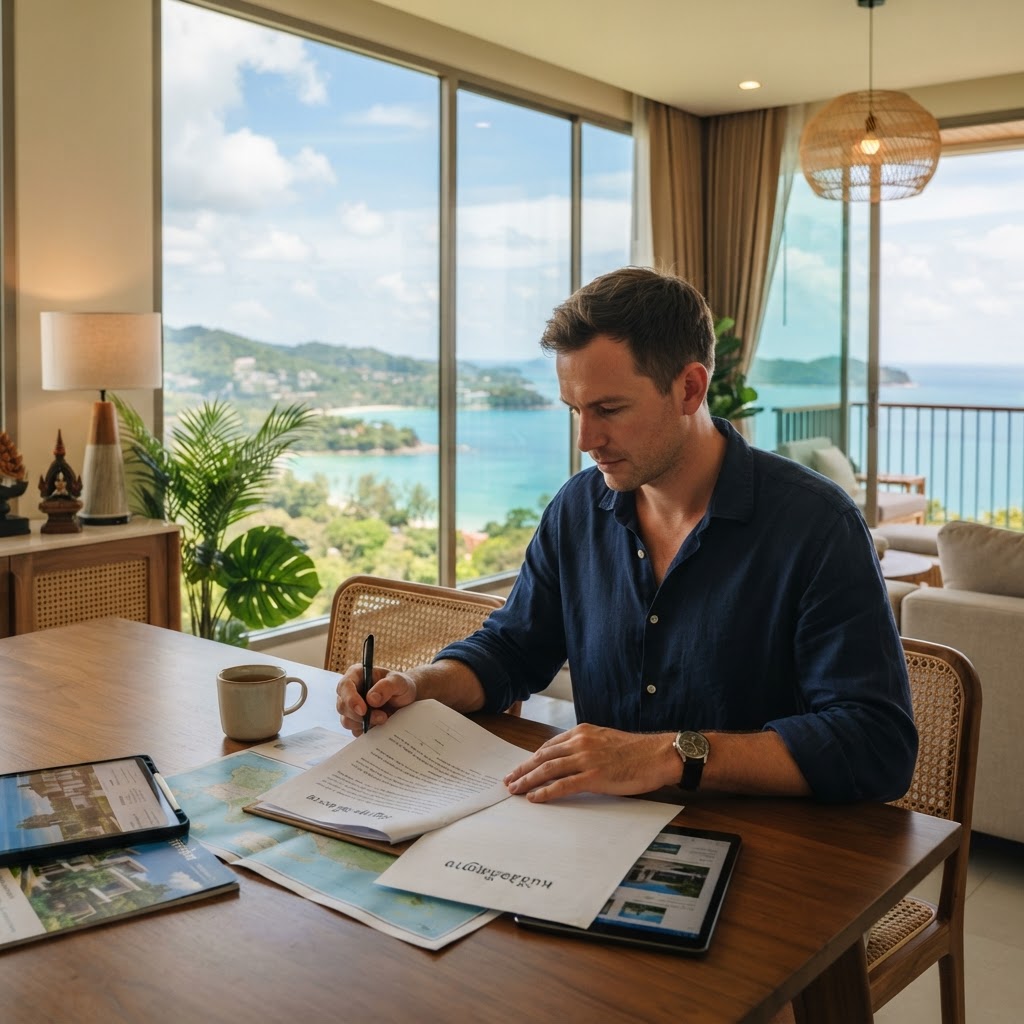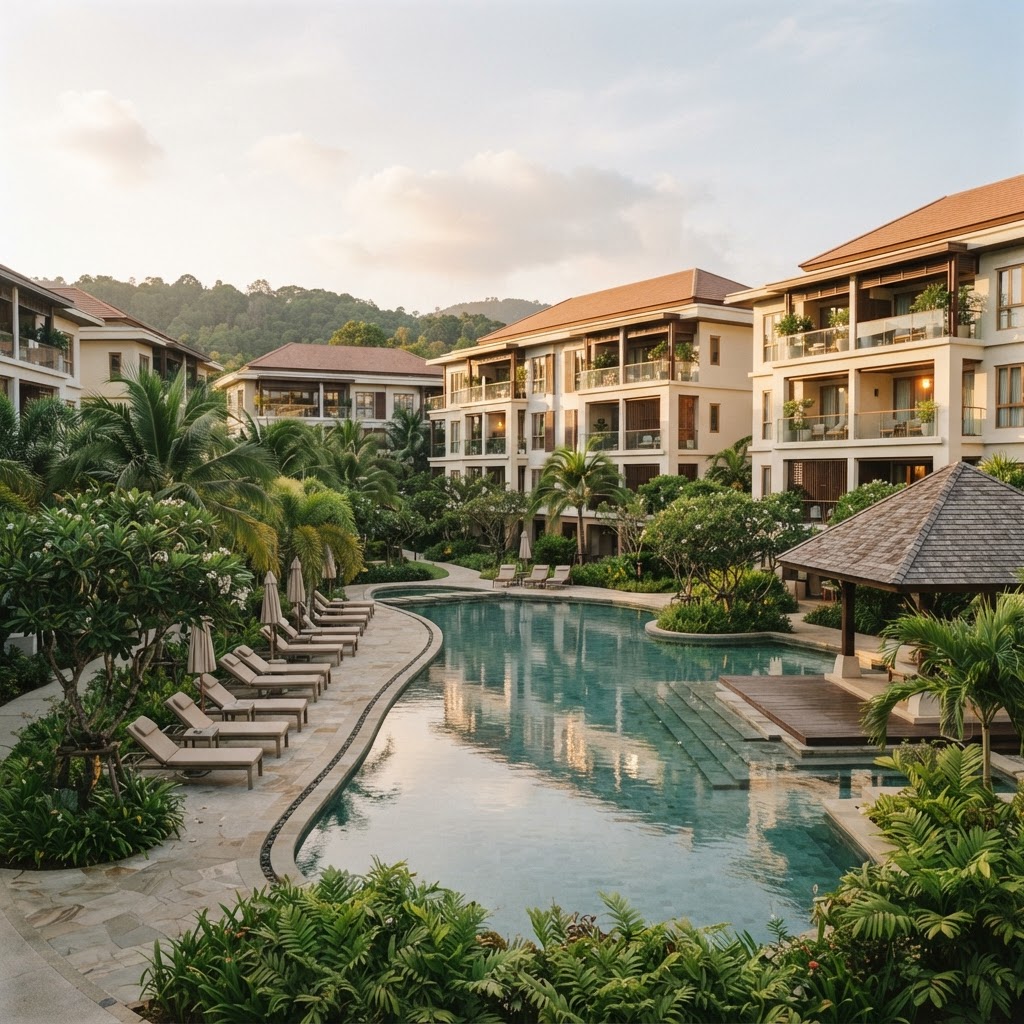
5 Documents to Request Before Booking a Condo in Phuket

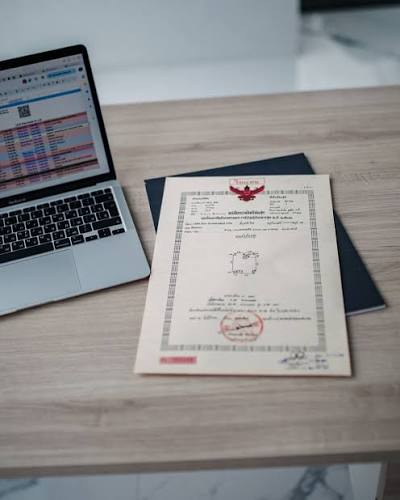
A glossy render shows what a project could look like. The documents show whether it can actually be built as promised.
Most buyers of property in Phuket start with the obvious questions:
- What is the view from the window?
- How many minutes to the beach?
- What yield can be expected?
- Will there be a pool, a gym and a management company?
These things matter. But before discussing the floor, the layout and the furniture package, we suggest asking one more question:
"Show me the documents."
Because a condo exists not only on the render and in the sales presentation. Behind it there must be a specific land plot, permits, approvals, a contract and a clear form of ownership.
This is especially true when buying off-plan, where instead of a finished unit the buyer receives a promise to build one in the future.
Here are the five groups of documents we want to see before a client pays a deposit or signs a contract.
1. Land documents
The plot comes first — then the project
Any construction begins not with an architectural concept or even an excavation. It begins with the land.
Before booking, it is important to understand:
- who is the legal owner of the plot;
- what document confirms the right to the land;
- whether the plot's location matches the advertised project;
- whether any encumbrances are registered;
- whether the developer has the right to use the plot and build on it.
Sometimes the land belongs to one company, construction is carried out by another, and the contract with the buyer is offered by a third. Such a structure does not necessarily mean a problem, but the links between all parties must be transparent and supported by documents.
What should raise concern
Phrases like:
"The land is registered to our partners" "The documents are being re-registered now" "This is a standard scheme, no one has asked before"
are not a substitute for legal due diligence.
If the developer's rights to the plot cannot be clearly explained and confirmed, choosing a view from the window is premature.
The key question at this stage: does the company have a lawful and sufficient right to deliver this specific project on this specific plot?
2. Permits and approvals
A permit must match what is being sold
The mere existence of a permit does not close the question. It matters which object it was issued for.
You should check:
- whether a construction permit has been issued;
- in whose name it is issued;
- which plot it relates to;
- what building parameters it specifies;
- whether the number of floors, area and purpose match the marketing materials;
- whether the approved project matches what is offered to the buyer.
This is especially important if, after receiving the permits, the developer changed the concept: added buildings, floors, units or infrastructure.
A beautiful master plan in the presentation is not yet proof that the entire shown complex is approved and can be built as presented.
Why this affects the buyer
Discrepancies between the approved and the sold project can lead to delays, layout changes, reduced infrastructure or other unpleasant surprises.
So you need to check not only the existence of the document, but its content.
The key question at this stage: is it permitted to build exactly the object the buyer is being asked to pay for?
3. EIA and other required approvals
"Coming soon" does not mean "already obtained"
Some projects require an environmental impact assessment — EIA, Environmental Impact Assessment. The need and scope of approvals depend on the characteristics of the specific project.
If an EIA is required, the buyer needs to know its real status:
- the assessment has already been passed;
- the documents have only been submitted;
- the project has been sent back for revision;
- the approval process has not yet started.
There is a significant difference between these stages.
The phrase:
"Approval is expected soon"
may sound confident, but legally it is not equivalent to:
"Approval has been obtained — here is the confirming document."
What to clarify
If a required approval has not yet been obtained, you need to find out:
- what conditions apply until it is obtained;
- whether the developer may accept payments;
- what happens if the approval is delayed;
- whether a refund to the buyer is provided for;
- whether these conditions are fixed in the contract.
A verbal promise from a manager should not be the buyer's only protection.
The key question at this stage: which mandatory approvals have already been obtained, and which so far exist only in plans?
4. The purchase contract
The most important terms are usually not in the presentation
Renders help you fall in love with a project. But it is the contract that determines what the buyer gets for their money and what happens if things do not go to plan.
We look carefully not only at the price of the condo, but at the entire mechanism of the transaction.
What to verify
Payment schedule. When and on what basis is each payment made? Are payments tied to construction milestones or only to calendar dates?
Project completion date. Is a specific handover date stated? Does the developer have an additional grace period during which a delay is not a breach?
Parties' liability. What liability is provided for the buyer in case of payment delay — and what liability arises for the developer in case of construction delay?
Refund of funds. In which cases can the buyer terminate the contract? Within what period and to what extent must the money be returned?
Changes to the project. Can the developer change the area, layout, finishing or infrastructure of the complex without the buyer's consent? What area deviation is considered acceptable?
Assignment. Can you sell your rights before construction is completed? Is the developer's consent required? Is there an assignment fee?
Additional costs. Besides the condo price, the following may arise:
- payments to a sinking fund;
- territory maintenance fees;
- registration costs;
- taxes and government fees;
- a furniture package;
- installation of meters;
- legal and administrative expenses.
It is better to understand all significant costs before signing, not after receiving the keys.
The main rule
Everything that matters for the purchase decision must be fixed in writing.
If a guaranteed yield, a specific fit-out, a view, a rental program or a handover date are promised, it is important to check whether these promises are reflected in the contract and its annexes.
The key question at this stage: what will happen to your money and your rights under each possible scenario?
5. Ownership-form documents
It matters not only what you buy, but what right you receive
The words freehold and leasehold often appear in marketing materials as two simple options. In practice, you need to understand the structure of the specific transaction.
The buyer needs to know exactly:
- what right they are acquiring;
- for what term;
- where and how it is registered;
- who will be named as the owner;
- whether the condo falls within the quota available to foreigners;
- what payments arise upon registration;
- whether the unit can be passed to heirs;
- how a subsequent sale will proceed.
Freehold
Usually this means registering ownership of the condo. For a foreign buyer, it is additionally important to check the availability of the foreign quota and the requirements for sourcing the funds.
Leasehold
In this case, you acquire not ownership but a long-term right of use under a lease agreement.
You need to check:
- the initial term;
- the registration procedure;
- renewal conditions;
- the cost of future renewal;
- the possibility of assignment and inheritance;
- circumstances of early termination of the agreement.
Pay special attention to promises of renewal. It is important to distinguish a legally закреплённое right from a commercial intention of the parties.
The key question at this stage: what exact right will the buyer receive after full payment, and how freely will they be able to dispose of it?
Document review does not guarantee a perfect investment
Even a legally sound project may not deliver the expected yield. The market can change, construction timelines can slip, and actual costs can exceed the initial forecast.
Documents do not provide complete protection against all investment risks.
But buying without due diligence significantly increases the number of unknowns.
The purpose of the review is not to find an investment with no risk at all. Such investments do not exist. The purpose is to understand the risks in advance, separate confirmed facts from promises, and make a decision with open eyes.
Why we start with uncomfortable questions
We also love beautiful architecture, swimming pools, tropical gardens and views of the Andaman Sea.
But the buyer's interests begin earlier — with checking what stands behind the project's presentation.
So before recommending a property, we want to understand:
- who owns the land;
- what is permitted to build;
- which approvals have already been obtained;
- what is written in the contract;
- what right will be registered in the buyer's name.
And only after that do we discuss the floor, the view, the design and the potential yield.
First the facts. Then the emotions. And only then — the decision to buy.
Planning to buy a condo in Phuket?
Send us the name of the project or a link to the property.
The Jungle House team will help you make sense of the offer, draw attention to the important conditions, and frame the questions worth asking before paying a deposit.
It is better to ask an uncomfortable question today than to face an unexpected condition after payment.
This material is for informational purposes and does not replace individual legal advice. The set of documents and the review procedure depend on the project, the form of transaction and the buyer's circumstances.
Get new articles in Telegram - follow the Jungle House Phuket channel
TelegramWant to discuss investments?
Write to us and we'll find properties to match your budget with an honest return calculation.