A 6-Million-Baht Apartment in Phuket: Full Cost and Real Yield

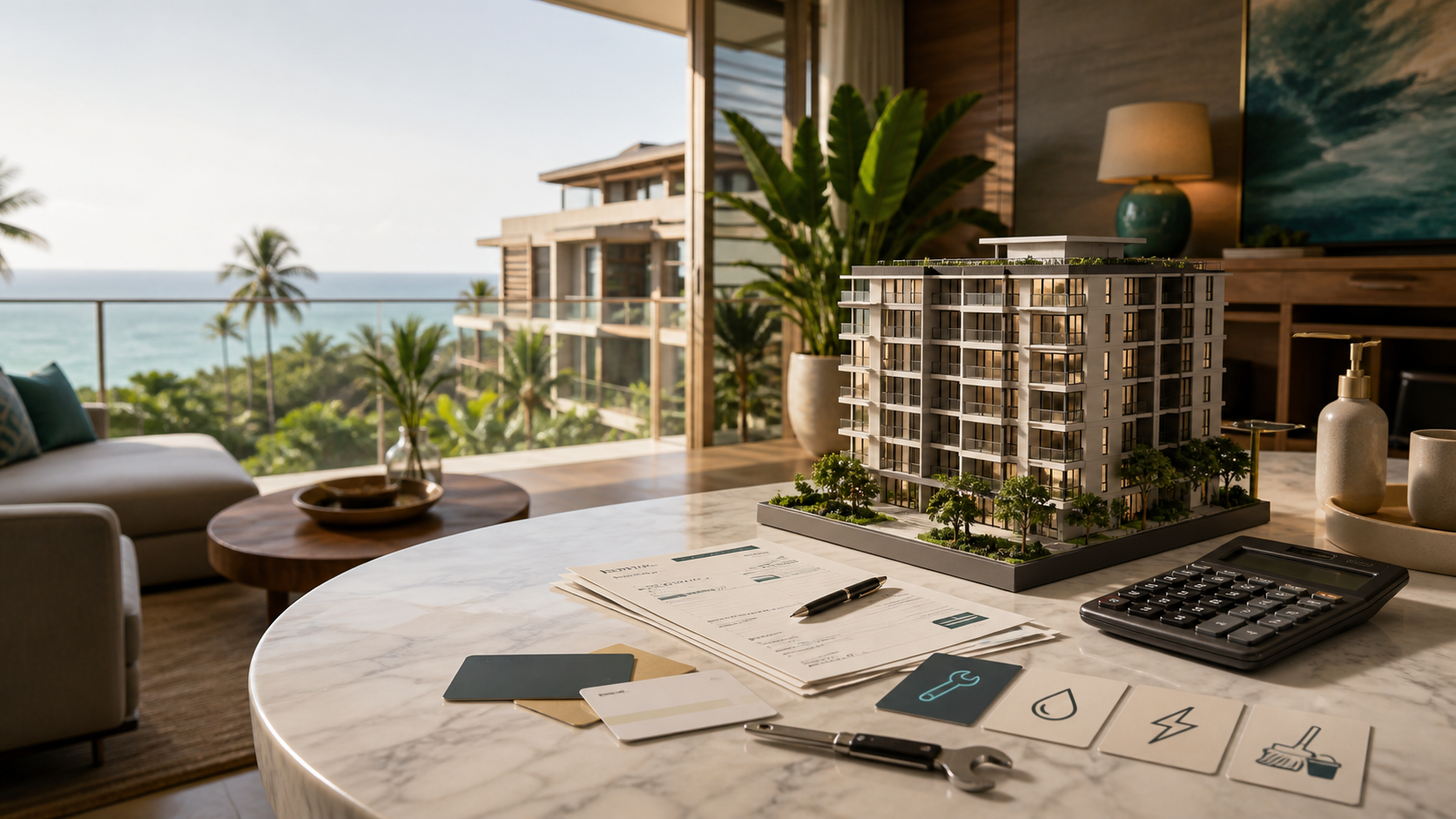
An Apartment Costs 6 Million Baht. What Will It Really Cost You?
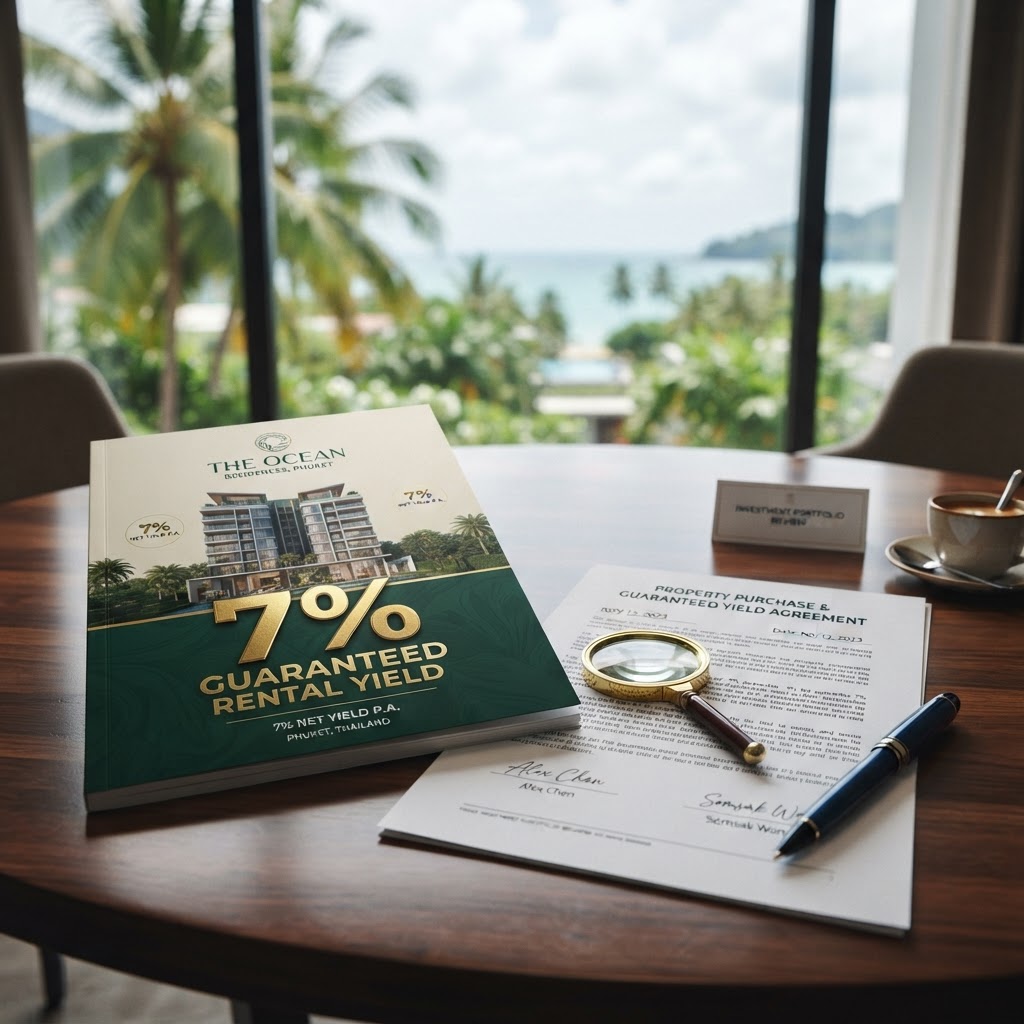
In a developer's brochure everything looks simple: an apartment costs 6 million baht, projected yield is 8–10% per annum, so the property should generate 480,000–600,000 baht a year.
But the apartment's price is only the cost of entering the deal.
After purchase come recurring payments, commissions, maintenance costs, periods without tenants, and unforeseen outlays. If you don't factor them in advance, a "profitable investment" can turn out far less lucrative.
So when buying property in Phuket, it's important to answer not one but two questions:
- How much money is needed to become the owner of a rental-ready apartment?
- What income remains after all expenses are deducted?
Let's break it down using a 6-million-baht apartment.
All amounts below are for illustration. Actual costs depend on the apartment's size, the project, ownership form, contract terms, rental strategy, and the owner's tax status.
The Apartment's Price Is Not the Full Investment
Suppose an investor buys a 45 m² apartment in a modern Phuket condominium.
The base price is 6,000,000 baht. But before launching the apartment for rent, additional outlays may be required:
If furniture is fully included in the price and part of the costs is covered by the developer, the total may be lower. If full furnishing, appliances, or high-end interiors are needed, the budget goes up instead.
So an apartment listed at 6 million baht in practice may require about 6.2–6.6 million baht before the first rental payment.
1. CAM Fee: Common Area Maintenance
CAM Fee, or Common Area Maintenance Fee, is a recurring charge for condominium upkeep.
It typically funds:
- security and CCTV;
- cleaning of common areas;
- pool and gym;
- reception;
- garden care;
- territory lighting;
- elevator servicing;
- waste removal;
- minor infrastructure repairs.
CAM Fee is calculated by apartment area. In Phuket condominiums a common guideline is 40–100 baht/m² per month, with higher rates in premium and resort projects. The exact amount is always stated in the project documents.
For a 45 m² apartment at 80 baht/m²:
45 m² × 80 baht × 12 months = 43,200 baht/year.
This payment does not depend on whether the apartment is rented or vacant. Even with months of no tenants, the owner keeps paying for the complex's upkeep.
A low CAM Fee isn't always an advantage. If the condominium's budget is insufficient, over time it can affect the pool, facade, elevators, and grounds — and therefore the apartment's appeal to tenants and future buyers.
For current guidelines on rates and service scopes, see reviews of Phuket condominium maintenance costs.
Want us to calculate the full cost of entry for a specific apartment in Phuket? — leave a request
2. Sinking Fund: Reserve for Major Repairs
The Sinking Fund is the condominium's reserve. It is meant not for daily maintenance but for large, long-term works:
- facade and roof repairs;
- elevator equipment replacement;
- pool renovation;
- engineering-system repairs;
- infrastructure restoration after serious damage.
The contribution is usually paid once at handover or title registration. Modern Thai projects commonly range from about 500 to 1,200 baht/m², though terms vary widely.
For a 45 m² apartment at 600 baht/m²:
45 m² × 600 baht = 27,000 baht.
It's important to check not only the initial contribution but the state of the fund itself. If an older condominium lacks reserves, owners may face additional capital-repair levies.
Before buying a completed property, request:
- the condominium juristic person's financial statements;
- information on owner arrears;
- the accumulated fund balance;
- minutes of recent meetings;
- plans for major repair work.
3. The Management Company: Commission Is Only Part of the Cost
If the owner doesn't plan to find tenants themselves, answer messages, organize check-in, and monitor the apartment, a management company is needed.
The cost of its services may include:
- a commission on rental income;
- listing promotion;
- booking-platform commissions;
- property photography;
- dynamic price management;
- guest communication;
- check-in and check-out;
- cleaning and linen change;
- purchase of consumables;
- minor repairs;
- reporting to the owner.
The main mistake is to look only at the management company's percentage.
For example, a 20% commission may not include cleaning, marketing, or platform fees. A 25–30% rate sometimes already covers almost the entire operational cycle. Compare offers by the total amount left to the owner.
Before signing, clarify:
- which amount the commission is calculated from;
- whether booking-service fees are included;
- who pays for cleaning;
- whether there's a separate booking fee;
- who approves discounts;
- the repair cap without owner approval;
- how often income is paid out;
- whether the contract can be terminated early.
4. Utilities: Who Pays — Owner or Guest?
Electricity, water, and internet may be paid by tenants, the owner, or the management company with later deduction from income.
In long-term rentals, utilities are usually easier to pass to the tenant. In short-term stays, costs are more often already included in the price.
In Phuket, electricity is the main item. Air conditioning, water heating, and high occupancy can noticeably raise bills. The tariff may also depend on whether the bill comes directly from the provider or through the project administration.
Your financial model should include:
- electricity;
- water;
- internet;
- air-conditioner servicing;
- filter replacement;
- household chemicals and consumables.
Even 4,500 baht a month becomes:
4,500 × 12 = 54,000 baht/year.
Before buying, ask for real bills from comparable apartments rather than relying only on the seller's verbal estimate.
5. Furniture and Apartment Refresh
A new apartment may look rental-ready, but developer furnishing doesn't always include everything needed.
Additionally, you may need:
- dishes and kitchen utensils;
- textiles;
- curtains;
- a TV;
- a washing machine;
- a workspace;
- decor;
- extra lighting;
- a quality mattress;
- locks or a self-check-in system.
After two or three years of active rental, the interior may already need a refresh. In a tropical climate, air conditioners, textiles, metal hardware, and humidity-sensitive surfaces wear out faster.
So it's reasonable to set aside an annual repair and renewal reserve — say, 30,000–50,000 baht a year. That doesn't mean the whole sum gets spent at once. But without such a reserve, replacing an air conditioner or damaged furniture will unexpectedly cut into a given year's income.
6. Vacancy: The Most Underrated Cost
Vacancy doesn't show up in a bank statement as a separate payment. Yet it often affects real yield the most.
If an apartment can rent for 50,000 baht a month, it doesn't mean the owner will receive 600,000 baht a year.
A property can sit empty due to:
- seasonal demand drops;
- high competition;
- repairs;
- a change of management company;
- booking cancellations;
- poor pricing;
- weak photos and reviews;
- restrictions in a specific condominium;
- the owner's personal use.
Suppose the apartment's potential income is 600,000 baht a year. With 15% lost to vacancy and discounts, actually received:
600,000 − 90,000 = 510,000 baht.
Those 90,000 baht are the real cost of unoccupied dates.
So when evaluating an investment apartment in Phuket, it's better to use several scenarios:
- optimistic;
- base;
- conservative.
If a property only looks attractive at near-100% occupancy and maximum rent, its financial model is too sensitive to the market.
Need an honest yield calculation across several scenarios before you buy? — leave a request
7. Taxes and Deal Registration
Buying property in Thailand incurs registration and legal costs. Their split between seller and buyer depends on the contract.
The base fee for registering the transfer of land or condominium title is 2% of the appraised value. The buyer's actual share may differ: costs are sometimes split equally, sometimes one party — often the developer or seller — fully covers one side. This must be fixed before signing. The rate is published on the official Thai government portal.
The budget may also include:
- legal due diligence on the property;
- contract review;
- registration fees;
- bank commissions;
- proof-of-funds processing;
- meter connection;
- costs for powers of attorney and translations.
Income from renting property in Thailand is taxable income. The final amount depends on the owner's status, ownership structure, income size, and allowable deductions. The Thai Revenue Department separately lists rental income among taxable categories and provides deductions in calculating the tax base. Current rules are published on the official Revenue Department website.
Tax can't be correctly calculated by a single universal rate for all investors. So in a preliminary model, set a separate tax reserve, and before launching rental, get advice from a specialist based on your specific deal structure.
Calculating the Real Yield of a 6-Million-Baht Apartment
Suppose the brochure shows potential rent of 50,000 baht a month.
At first glance the calculation is:
50,000 × 12 = 600,000 baht/year.
600,000 ÷ 6,000,000 × 100% = 10% per annum.
But now add real expenses.
| Item | Annual amount |
|---|---|
| Potential rental income | 600,000 baht |
| Vacancy and discounts — 15% | −90,000 baht |
| Actually received revenue | 510,000 baht |
| Management and promotion — 20% | −102,000 baht |
| CAM Fee | −43,200 baht |
| Utilities and internet | −54,000 baht |
| Cleaning and check-in not paid by guests | −24,000 baht |
| Repair and renewal reserve | −30,000 baht |
| Income before individual tax | 256,800 baht |
Now yield should be calculated not from the advertised 6 million baht but from the full investment — 6,407,000 baht in our example:
256,800 ÷ 6,407,000 × 100% ≈ 4% per annum before individual tax.
This isn't a yield forecast for a specific property — it's a demonstration of the principle. With higher occupancy, good management, and utilities paid by guests, the result will be better. With long vacancy or expensive repairs — worse.
The key point is that advertised 10% and real 4% can describe the very same apartment. The difference lies in the calculation method.
What Documents to Request Before Buying
To assess the full cost of ownership, before paying a deposit request:
- the exact area CAM Fee is calculated from;
- the current CAM Fee rate and its revision procedure;
- the Sinking Fund amount and payment terms;
- a list of furniture and appliances;
- the split of registration costs;
- electricity and water tariffs;
- the management-company contract;
- a full list of commissions;
- occupancy statistics for comparable apartments;
- actual rental rates by month;
- short-term rental rules in the specific project;
- the condominium's financial statements;
- information on planned repairs;
- freehold or leasehold terms;
- a tax calculation for your chosen ownership structure.
It's especially important to separate facts from forecasts. Guaranteed yield, potential rate, and historical occupancy are three different figures.
The Investor's Key Formula
Yield is not calculated from a beautiful number in a brochure.
It's calculated from the full investment and the real net income:
Net yield = net annual income ÷ total investment × 100%.
Where total investment includes not only the apartment price but registration, the reserve fund, furnishing, and property preparation.
And net income is what's left after vacancy, management, utilities, maintenance, cleaning, repairs, and taxes.
So How Much Does a 6-Million-Baht Apartment Really Cost?
Short answer: more than 6 million.
At the purchase stage the real amount may be about 6.2–6.6 million baht. After that, the owner bears fixed and variable costs each year, and their size directly depends on the project and chosen rental strategy.
That's why two apartments with the same price can produce very different results:
- one has a high CAM Fee but steadily attracts tenants;
- another is cheaper to maintain but often sits vacant;
- a third shows strong revenue but most of it goes to commissions;
- a fourth requires significant outlay within just a few years.
The purchase price matters. But for an investor, the cost of the property's entire life cycle matters far more.
Calculate the Investment Before You Buy
Before purchase, we evaluate more than just the apartment's price.
We calculate the full cost of entry, recurring expenses, possible vacancy, the management company's work, and net income across several scenarios.
That way the investor understands in advance how much money is truly needed and what yield the property can deliver after all costs.
Want to discuss investments?
Write to us and we'll find properties to match your budget with an honest return calculation.