Why Phuket Stops Being a Holiday
Most people first arrive in Phuket as tourists.
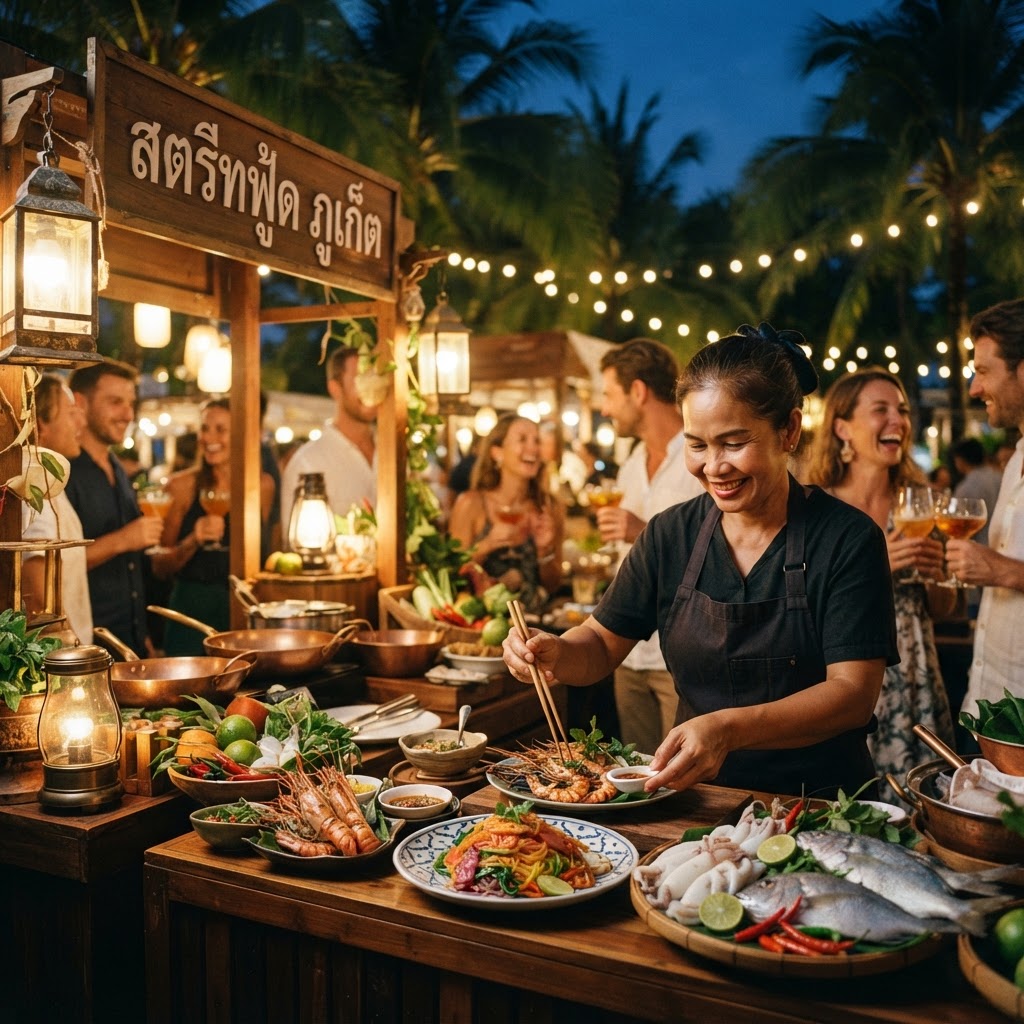
Sea, beaches, restaurants, a hotel. Morning — breakfast with a view, day — the beach, evening — a walk or dinner. There's no need to think about everyday routes, schools, parking, electricity bills, or how long the drive to the right district takes.
But after a few months of life here, the island begins to feel very different.
Phuket gradually stops being a holiday backdrop and becomes a place where ordinary life unfolds — with its own habits, plans, tasks, and social circle.
And it's at exactly this moment that many people, for the first time, have the thought:
"It seems I want a place of my own here."
If Phuket has become more for you than a holiday — message me on WhatsApp, and I'll help you pick a district and a unit for your real life.
First you arrive in Phuket as a tourist
During a short holiday we judge the island by fairly simple criteria:
- is the sea close;
- is there a nice view from the window;
- are there restaurants nearby;
- how comfortable the hotel is;
- where to go on an excursion;
- where to spend the evening.
That's logical. A holiday lasts one or two weeks, so you want the maximum number of impressions in a short time.
The district that's perfect for a holiday may seem like unconditionally the best place on the island. And a striking unit with a beautiful pool and an impressive interior — the property of your dreams.
But the tourist scenario barely shows how convenient it will be to live here every day.
To truly understand Phuket, you need to spend not just a weekend on the island, but an ordinary Monday.
After a few months, a different Phuket appears
When a person stays on the island longer, their attention gradually shifts from impressions to the quality of everyday life.
Things appear that weren't in the tourist itinerary:
- a familiar school or kindergarten;
- a favourite district;
- your own gym;
- doctors you trust;
- friends and acquaintances;
- work meetings;
- tried-and-tested shops and services;
- favourite cafes and restaurants;
- clear everyday routes.
You already know where it's convenient to buy groceries, what time to leave home, and how long the drive to school takes. You understand where it's genuinely comfortable to live, and where it's pleasant to spend only a few days.
The island becomes legible.
And the less uncertainty there is in life, the stronger the sense that Phuket is no longer a temporary point on the map.
A tourist chooses the view, a resident chooses the daily route
One of the key transitions happens the moment a person starts looking at Phuket's districts not through the eyes of a tourist, but through the eyes of a resident.
For a holiday, proximity to the beach may be what matters most. For permanent life, the criteria usually multiply:
- how long the drive to school takes;
- how convenient the commute is;
- whether there are shops, sport, and medical care nearby;
- how busy the roads are;
- whether there's parking;
- whether it's quiet in the evening;
- whether it's comfortable here in high and low season;
- whether the district suits every family member.
A beautiful view remains important. But gradually it stops being the only argument.
Because property for life has to look good not only in a photo. It has to withstand an ordinary weekday.
A person gets their own island
Everyone's Phuket is their own.
For one person it's a morning workout, working from a cafe, and an evening walk by the sea. For another — school, kids' activities, family weekends, and short drives along a familiar route. For a third — a quiet house away from the tourist centre and the chance to live in a warm climate for several months a year.
Gradually a personal coordinate system takes shape on the island:
- districts where it's comfortable;
- places you want to return to;
- people tied to the feeling of home;
- habits you no longer want to change.
At this point Phuket stops being just a popular resort. It becomes part of a way of life.
Why long-term rental starts to wear you down over time
At the first stage, renting is a sensible decision. It helps you calmly study the island, live in different districts, and understand your own needs.
But if a person returns to Phuket every year or stays here for a long time, the inconveniences of renting begin to show.
Each new season can mean:
- a renewed search for a suitable unit;
- a changed rental rate;
- the need to move;
- new conditions from the owner;
- unavailable dates;
- the inability to adapt the space to yourself;
- dependence on seasonal demand.
It's especially hard when a family already has a familiar district, a school, and a settled routine. Changing a home starts to affect not only comfort but the whole organisation of life.
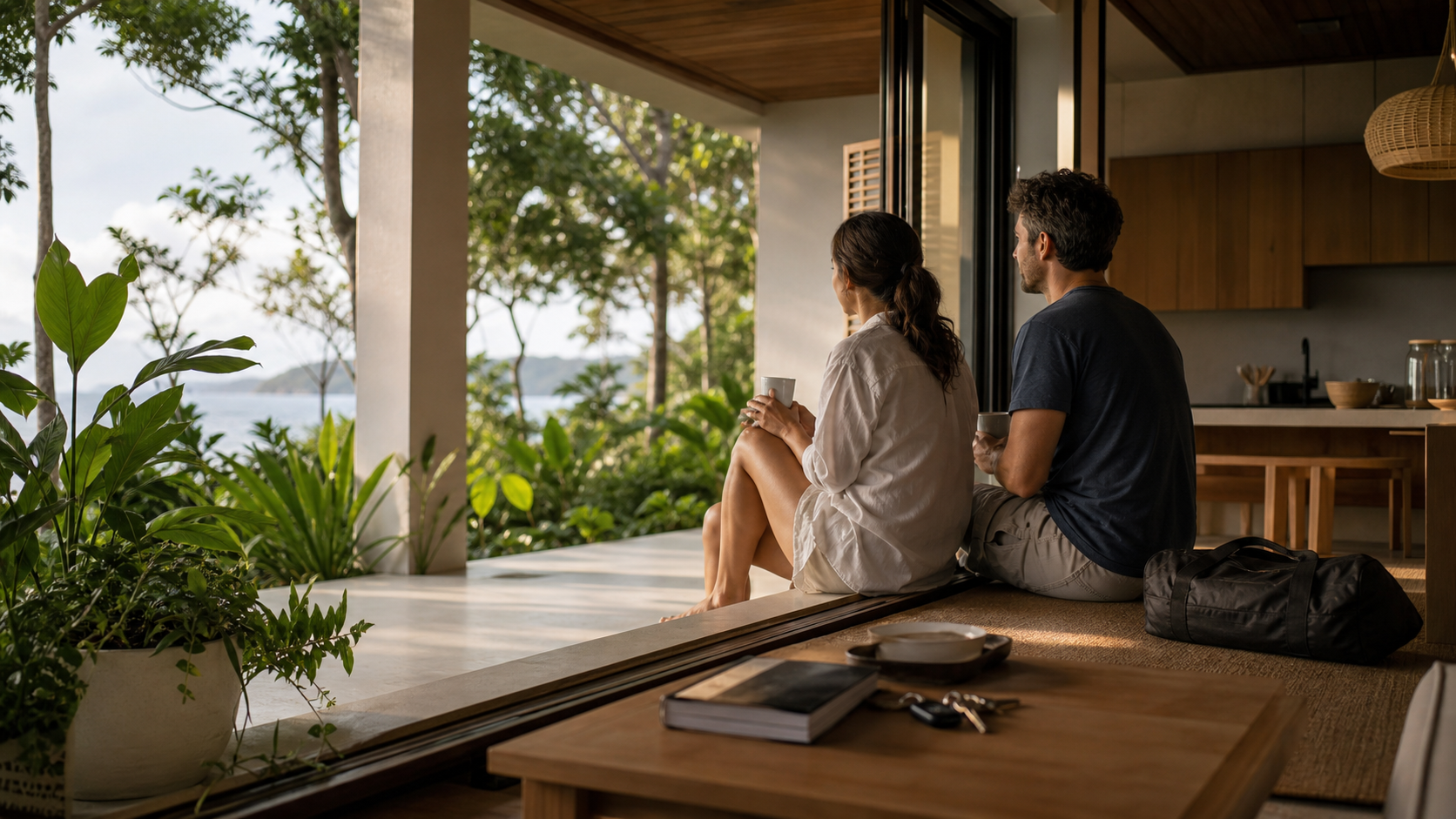
And then the desire appears — not just to rent square metres, but to create a permanent anchor.
A place to return to. Where your belongings stay. Where everything is set up around your own habits. Where you don't have to start the search anew every season.
Tired of searching for a rental every season? — message me on WhatsApp to discuss buying your own place in Phuket.
Buying property starts with more than just investments
The conversation about Phuket property often begins with numbers:
- the unit's price;
- potential rental yield;
- price growth;
- maintenance costs;
- holding period;
- a possible resale.
All these metrics matter. Especially if the unit is viewed as an investment or is meant to be rented out part of the year.
But the decision to buy for yourself is often born before the financial table.
It begins with a simpler thought:
"I want a place of my own here."
And only then do practical questions arise:
- which district to choose;
- an apartment or a villa;
- how many bedrooms are needed;
- whether the unit will be used year-round;
- whether it can be rented out while you're away;
- what budget is comfortable;
- how much maintenance will cost;
- how to arrange the purchase;
- how easy it will be to sell the unit in the future.
An emotional reason for buying doesn't cancel out the calculations. But it's often what becomes the first impulse.
Your own place isn't necessarily the dream property from an ad
Buyers sometimes start the search with an image of the ideal unit: a panoramic view, a designer interior, a pool, five minutes to the beach.
However, real life quickly refines priorities.
For a family with children, a convenient road to school may matter more. For someone working from home — quiet, a separate office, and stable infrastructure. For someone who travels often — security, easy maintenance, and the ability to close the unit for a few months.
So a suitable home isn't always the most striking unit in a selection.
More often it's property that matches a specific life scenario:
- the right size;
- in a convenient district;
- without excessive costs;
- understandable to maintain;
- legally correctly structured;
- that stays liquid if plans change.
A good choice is a balance between emotion and practicality.
How to tell you're choosing property for life
Before viewing units, it's useful to answer a few questions.
Where does most of your day take place?
Don't limit yourself to the beach. Mark the school, work, gym, medical facilities, shops, and places of regular meetings.
This helps you understand which district is genuinely convenient, not just which one looks good on a map.
How long do you plan to stay in Phuket?
Living here two months a year is different from living here permanently. The format of the unit, the infrastructure, the costs, and the property management requirements during your absence all depend on this.
What matters more to you: privacy or ease of maintenance?
A villa can offer more space and seclusion, but usually requires more attention. An apartment in a condominium can be easier to maintain, especially if the owner travels often.
Do you need to rent the unit out?
If you want income during your absence, this should be factored in before purchase. What matters is not only the unit's appeal to tenants, but also the project's rules, the management format, possible restrictions, and real costs.
What happens if your plans change?
Even property for yourself should be assessed for future liquidity. Family situation, place of work, and preferences can change. So it's important to understand how wide the pool of potential buyers or tenants will be.
Rent or buy?
There's no universal answer.
Renting can make more sense if you:
- recently arrived in Phuket;
- haven't settled on a district yet;
- don't know how much time you'll spend on the island;
- want to stay mobile;
- are still only testing a new way of life.
It's worth thinking about buying if you:
- regularly return to the island;
- have already found a suitable district;
- plan to live here long-term;
- want to arrange the space to your taste;
- are tired of dependence on seasonal rental;
- understand the budget for purchase and ongoing maintenance.
Sometimes the best path is to first rent a home in the chosen district for a few months and only then decide.
A purchase shouldn't be an attempt to guess whether you'll like life in Phuket. Ideally, by the time of the deal, the answer should already be clear.
Not sure whether to rent or buy? — message me on WhatsApp, and I'll help you compare scenarios for your situation.
How to choose a unit for real life
Once the district and life scenario are set, you can move on to specific units.
At this stage it's important to check not only the layout and the view from the window.
Location
Assess real routes at different times of day. Distance in kilometres doesn't always show how long the drive will take.
Infrastructure
Check what you'll use regularly: shops, cafes, sport, medical care, schools, kids' activities, and services.
Layout
Imagine not a holiday, but an ordinary week. Is there space for work? Enough storage? A convenient kitchen? Is the number of bedrooms right?
Costs
Beyond the purchase price, account for maintaining the unit, utility bills, common-area maintenance, repairs, management, and possible taxes or fees.
Legal structure
The form of ownership, the buyer's rights, contracts, and restrictions depend on the property type and the specific deal. These questions should be checked before making significant payments, with an independent lawyer involved where necessary.
Liquidity
Even if you're buying for yourself, it's useful to assess the unit from the perspective of the future market: how well-known the district is, whether the format is in demand, and how easy it will be to rent or sell.
Life shapes the property, not the other way around
One of the most common mistakes is to first fall in love with beautiful property and then try to fit your life into it.
A more reliable sequence looks different:
- Understand your life scenario in Phuket.
- Choose suitable districts.
- Define the format and a comfortable budget.
- Calculate the full cost of ownership.
- Check the legal structure.
- Compare specific units.
- Only then make a decision.
That's how an emotional desire to have a place of your own turns into a conscious purchase.
Phuket gradually becomes home
There's usually no single moment when a holiday suddenly ends and a new life begins.
It happens unnoticed.
You stop photographing the sea every day. You memorise the short route to the shop. You run into acquaintances at a cafe. You know who to call if you need a doctor, a handyman, or a tutor. You plan things months ahead.
And then you catch yourself thinking that after a trip you're no longer returning to Phuket.
You're coming home.
That's why a property purchase often doesn't start with an investment table.
It starts with a thought:
"It seems I want a place of my own here."
And only after that do we start choosing the district, the format, and the unit for real life — not for a pretty picture.
If Phuket has already become more for you than a place for a holiday, we'll help you identify the right district, compare property formats, and pick a unit that fits your way of life, budget, and long-term plans.
To discuss selecting property in Phuket — message me on WhatsApp or explore districts on our map.
Frequently asked questions
Is it worth living in Phuket on a rental first?
Yes, if you haven't chosen a district yet and don't understand your daily route. A few months of renting help test your real needs and reduce the risk of buying a unit that suits a holiday but is inconvenient for permanent life.
Which is better for life in Phuket: an apartment or a villa?
It depends on family composition, length of stay, willingness to handle maintenance, and privacy requirements. An apartment is usually easier to maintain, while a villa offers more space but may require additional costs and attention.
How do I choose a Phuket district for permanent living?
Start with daily routes: school, work, shops, sport, medical care, and leisure. After that, assess the traffic situation, infrastructure, the district's atmosphere, and your available budget.
Can the property be rented out while the owner is away?
This depends on the property type, the complex's terms, the management agreement, and the requirements in force. The possibility and the rental model must be checked before purchase, not based solely on advertising promises.
Do I need to assess yield if the unit is bought for myself?
Yes. Even if income isn't the main goal, it's worth understanding maintenance costs, potential rental demand, and the unit's liquidity. This helps preserve financial flexibility if your plans change.
This material is informational in nature. Ownership terms, costs, usage rules, and the legal structure of property depend on the specific unit and deal and require separate verification.
Get new articles in Telegram - follow the Jungle House Phuket channel
TelegramWant to discuss investments?
Write to us and we'll find properties to match your budget with an honest return calculation.